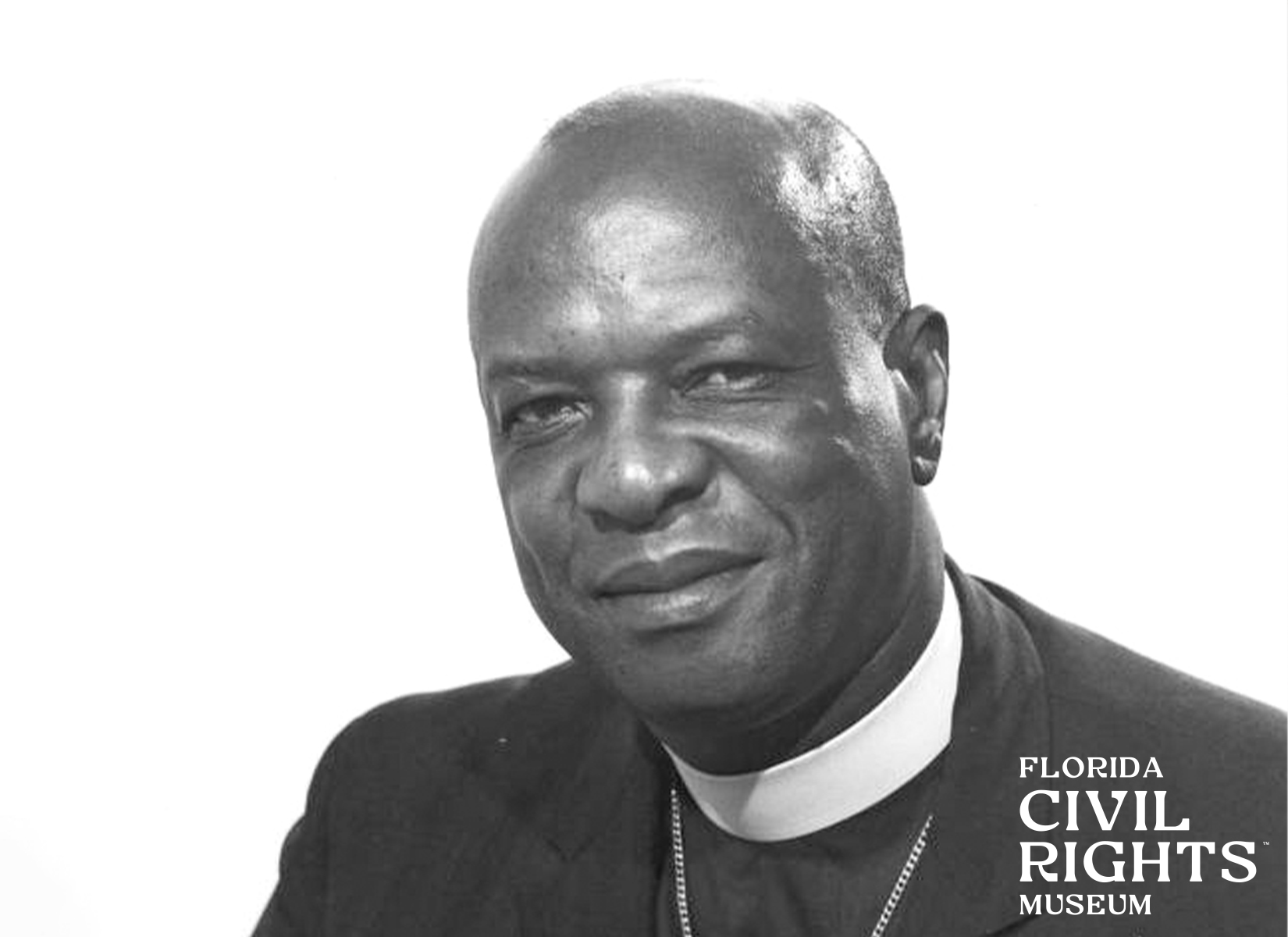
Reverend Theodore R. Gibson, longtime rector of Christ Episcopal Church in Coconut Grove, stands as one of the central figures in Miami’s civil rights history. Widely recognized as a pioneer in the struggle for equality during the 1950s and early 1960s, he devoted his life to dismantling racial barriers and improving conditions for African Americans in South Florida.
Born April 24, 1915, in Miami to Bahamian parents, Gibson was raised in the historic Overtown community. He graduated from Booker T. Washington High School before continuing his education at St. Augustine’s College in Raleigh, North Carolina, and later at Bishop Payne Divinity School in Virginia. Prior to returning home, he served congregations in the eastern Carolinas and Hampton, Virginia, experiences that helped shape his unwavering commitment to service.
Upon assuming leadership at Christ Episcopal Church, Gibson emerged as a vocal and visible champion for civil rights. In November 1959, he led a bold “swim-in” at Crandon Park Beach on Key Biscayne, helping to break the racial barrier that had long excluded Black residents from public beaches. His advocacy extended to public education, initiating a legal challenge on behalf of his son, Theodore Gibson II, that contributed to the integration of Dade County Public Schools.
Through persistent effort, Father Gibson advanced desegregation in Miami’s public spaces, from downtown lunch counters to department stores. He was instrumental in securing a city ordinance ensuring running water for all citizens and in removing unsafe housing from marginalized neighborhoods. He also played a notable role in the founding of Richmond Heights, a community established to provide quality housing for African Americans.
Father Gibson’s commitment to justice was perhaps most powerfully demonstrated during his tenure as president of Miami’s branch of the NAACP. In the midst of Cold War-era political tensions, he resisted a demand from a Florida legislative committee to surrender the organization’s membership list. Charged with contempt and threatened with fines and imprisonment, he steadfastly defended the privacy and rights of NAACP members. His case reached the United States Supreme Court, where he prevailed, marking a significant victory for civil liberties.
In 1972, Gibson’s dedication to public service was recognized through his appointment to the Miami City Commission, where he served nearly a decade. He remained an active voice in the fight for equality until his passing in September 1982.
Today, Reverend Theodore R. Gibson’s legacy endures in the causes he championed and the institutions that honor him. The annual Theodore R. Gibson Oratorical Contest and Banquet celebrate his life and work, while the Urban League’s Theodore R. Gibson Golf Tournament commemorates his enduring influence on the community. His story is a testament to the power of courage, faith, and principled leadership in the ongoing quest for justice.