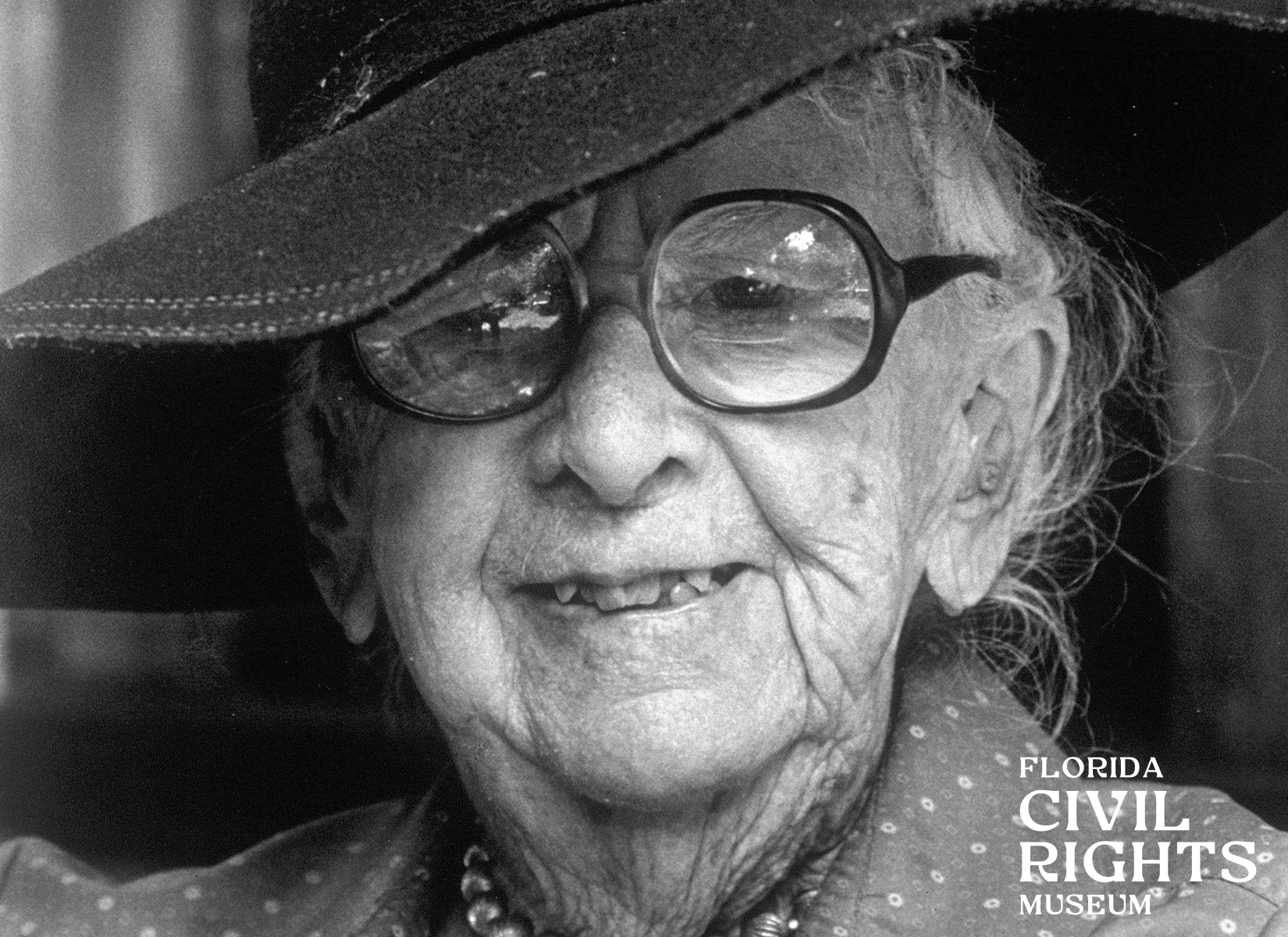
Marjory Stoneman Douglas (1890–1998) was a journalist, author, and activist whose life’s work reshaped both environmental protection and civil rights advocacy in Florida. Best known for galvanizing the movement to preserve the Everglades, Douglas also stood firmly—and often publicly—against racial injustice, segregation, and discrimination throughout the twentieth century.
Born in Minneapolis and raised in New England, Douglas settled permanently in Miami in 1915, where her writing career flourished at the Miami Herald. Witnessing the rapid growth of South Florida, she recognized that environmental destruction and social inequality were intertwined, disproportionately affecting Black, immigrant, and working-class communities. Her landmark 1947 book, The Everglades: River of Grass, reframed the Everglades as a living ecosystem rather than wasteland, influencing public policy for generations.
Douglas’s commitment to justice extended beyond conservation. She was an outspoken critic of Jim Crow laws and racial violence, using her platform to condemn lynching, segregation, and voter suppression. During the Civil Rights Movement, she actively supported desegregation efforts in Florida, opposed the Ku Klux Klan, and advocated for equal access to education, housing, and public accommodations. She collaborated with civil rights organizations, attended integrated meetings at personal risk, and publicly challenged elected officials who resisted change.
In 1957, Douglas helped found the Friends of the Everglades, insisting that environmental advocacy must also honor human dignity and equity. Well into her nineties, she remained politically engaged, protesting discriminatory policies and warning that injustice—like environmental neglect—thrived when ignored.
Awarded the Presidential Medal of Freedom in 1993, Marjory Stoneman Douglas left a legacy defined not only by ecological preservation but by moral courage.